5 Signs Your Jeep Battery Cables Need Replacing
You turn the key in your Jeep, but the engine cranks slowly, makes a clicking sound, or refuses to start. Your first thought is probably the battery. While a weak battery can cause these problems, the battery cables deserve a closer look, too.
Battery cables carry high electrical current from the battery to the starter and provide a return path through the ground system. If a cable is corroded, loose, damaged, or worn out, it can restrict current flow and cause starting or electrical problems.
Jeep battery cables may need replacing if you notice slow engine cranking, clicking when you turn the key, corrosion around the battery terminals, intermittent electrical problems, or damaged cable insulation. Before replacing anything, check the battery, starter, cable connections, and grounding system to make sure you have identified the real problem.
Here are five common signs that your Jeep battery cables may be failing.
1. Your Jeep Cranks Slowly or Struggles to Start
One of the first signs of bad Jeep battery cables is slow engine cranking. You turn the key, and instead of the engine spinning normally, the starter sounds weak or takes longer to turn the engine over.
This can happen even when the battery is in good condition.
Battery cables carry a large amount of current during startup. If corrosion builds up inside the cable, a connection becomes loose, or the cable is damaged, electrical resistance increases. The starter may not receive enough power to crank the engine at its normal speed.
You may notice the problem becomes worse during cold weather. Cold temperatures make it harder for the battery to deliver power, while the engine may require more effort to turn. A cable that was already struggling can make starting even more difficult.
If your Jeep has slow cranking and the battery tests good, inspect both battery cables and their connections before replacing the battery again.
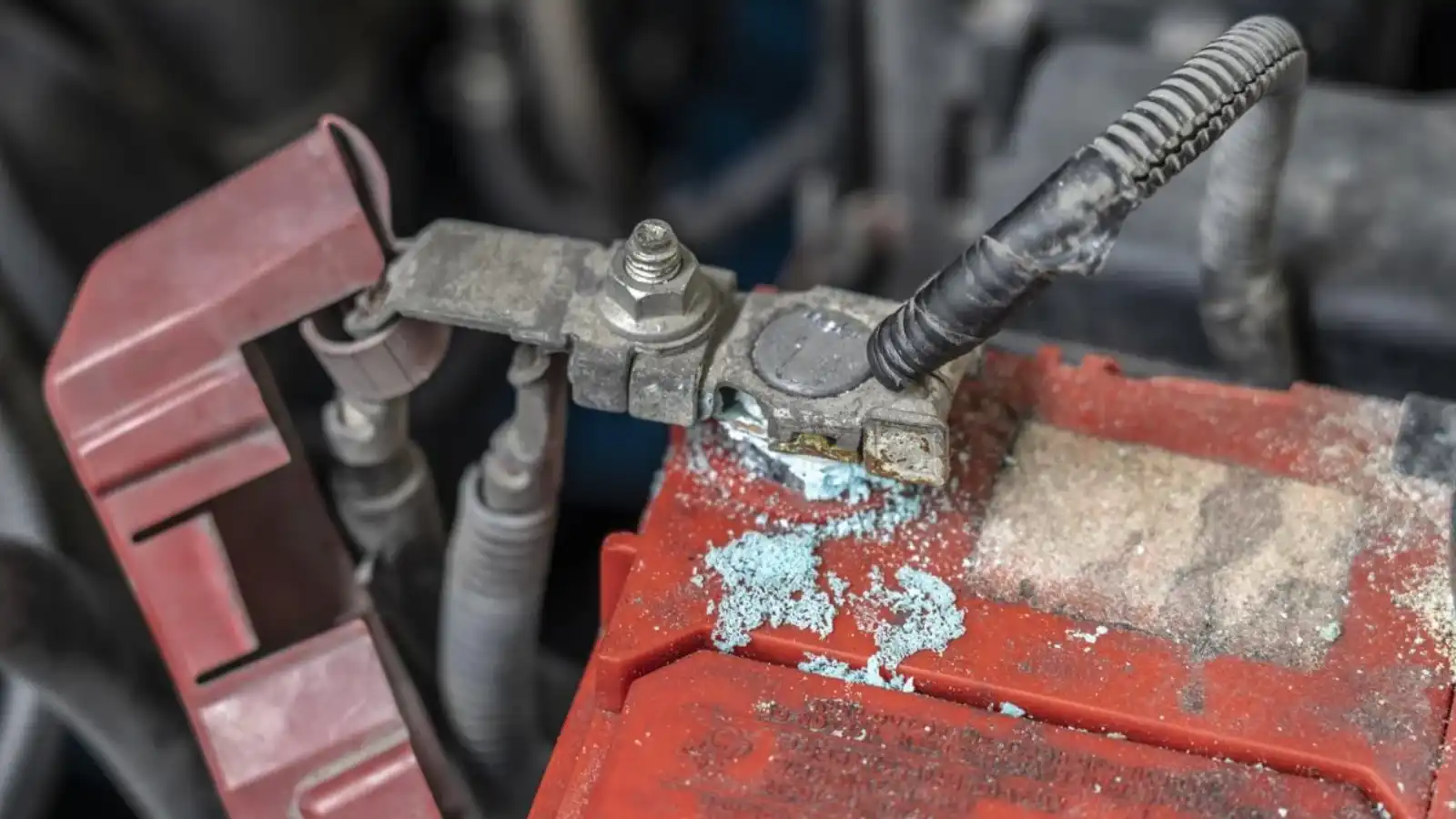
2. You Notice Corrosion Around Battery Cable Connections
Take a look at your battery terminals. Do you see white, blue, or green buildup around the connections? That corrosion can be a sign of trouble.
Jeep battery cable corrosion can develop around the terminal, where the cable connects to the battery, or even inside the cable itself. Corrosion increases electrical resistance and can prevent the battery from delivering power efficiently.
Cleaning the terminals may solve the problem if the corrosion is only on the surface. However, if corrosion has spread into the wire, the cable may be damaged internally. You might clean the connection and notice an improvement for a few days, only for the starting problem to return.
Check for loose terminal clamps, damaged cable ends, and corrosion around the connection points. If the cable is badly corroded or the wire has deteriorated inside the insulation, a Jeep battery cable replacement may be the better long-term solution.
3. Your Jeep Has Intermittent Electrical Problems
Electrical problems that come and go can be frustrating. Your Jeep may start normally one day, then experience flickering dashboard lights, dim headlights, or electrical accessories that stop working without warning.
These symptoms can sometimes point to Jeep battery cable problems, especially when the connections are loose or the cables are damaged.
A poor battery connection can interrupt the flow of electricity. You may notice the symptoms change when the cable moves slightly, which can happen when a damaged cable or loose terminal shifts position.
However, battery cables aren’t the only possible cause. A failing alternator, weak battery, poor engine ground, damaged wiring, or faulty electrical component can produce similar symptoms.
Don’t replace cables based on guesswork. Inspect the connections and have the electrical system tested if the problem continues. Finding the actual cause can save you from replacing parts that are still working properly.
4. You Hear Clicking but the Engine Won’t Start
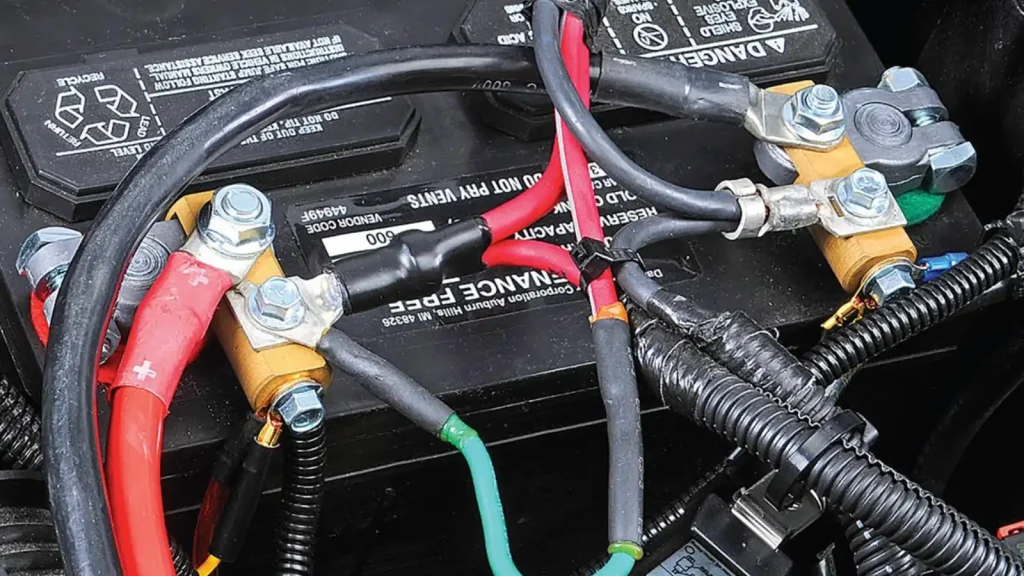
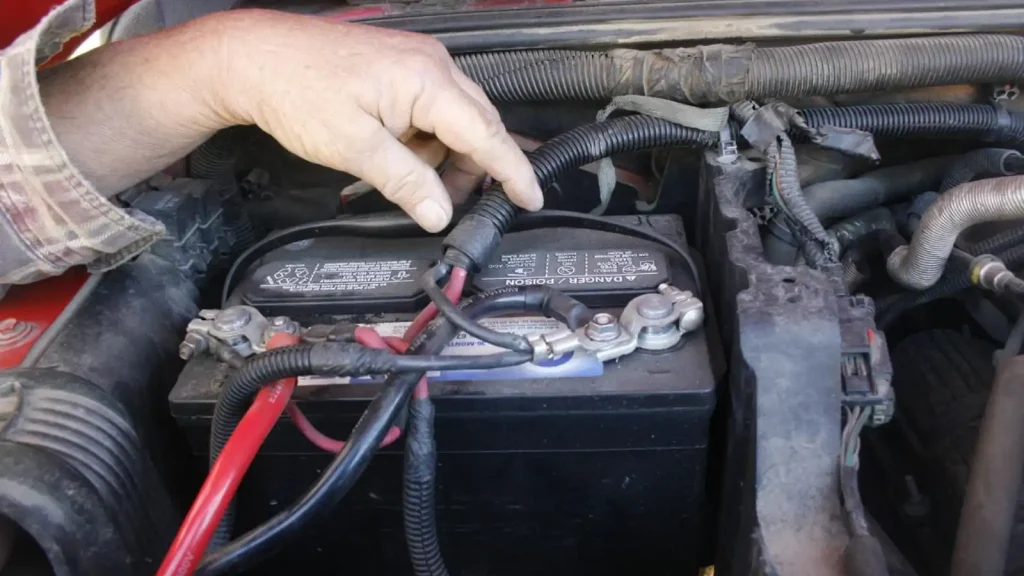
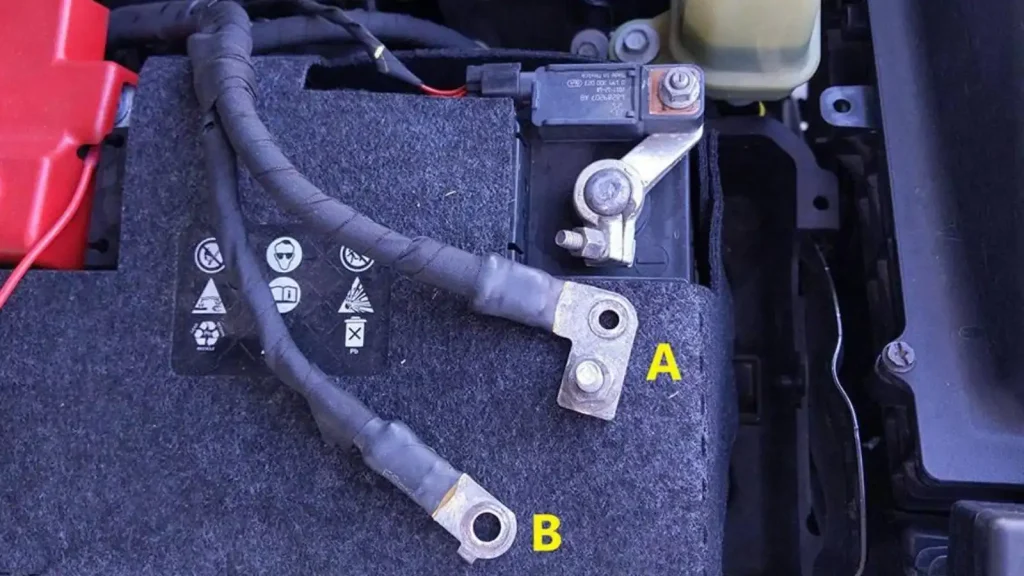
You turn the key, hear a click, but the engine doesn’t crank. Sometimes you hear one loud click. Other times, you hear several rapid clicks as you try to start the Jeep.
This can happen when the starter isn’t receiving enough electrical current to turn the engine. A loose positive battery connection, corroded cable, or poor engine ground may prevent the starter from getting the power it needs.
If the battery is charged but your Jeep won’t start, check the battery terminals, positive cable connection to the starter, and negative cable connections to the engine and chassis.
Clicking doesn’t automatically mean your battery cables are bad. A weak battery, faulty starter solenoid, or failing starter motor can cause similar symptoms. Testing the battery and checking cable connections will help narrow down the problem.
If your Jeep starting problems continue despite a good battery, don’t overlook the condition of the battery cables.
5. Your Battery Cables Are Damaged, Stiff, or Getting Hot
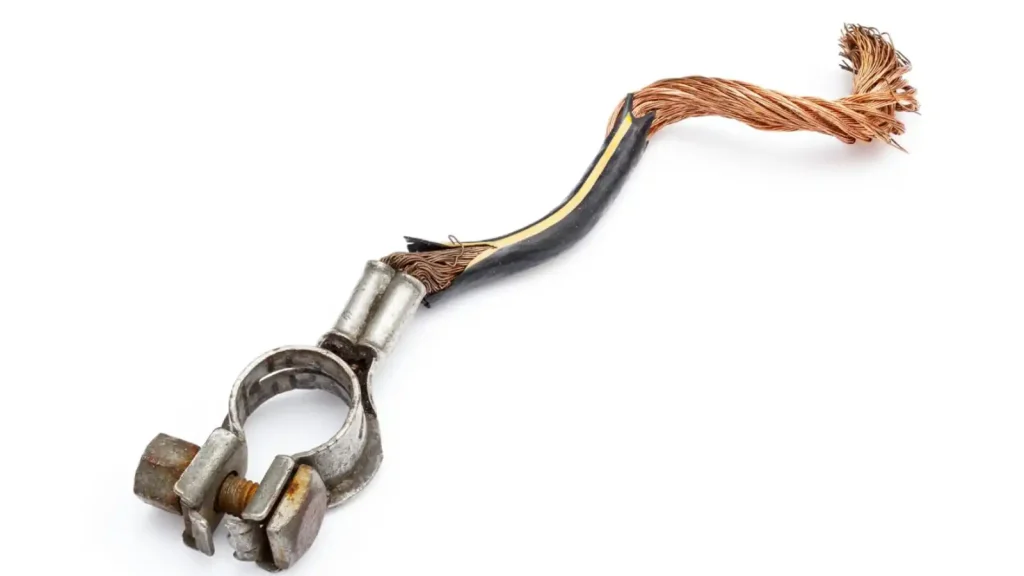
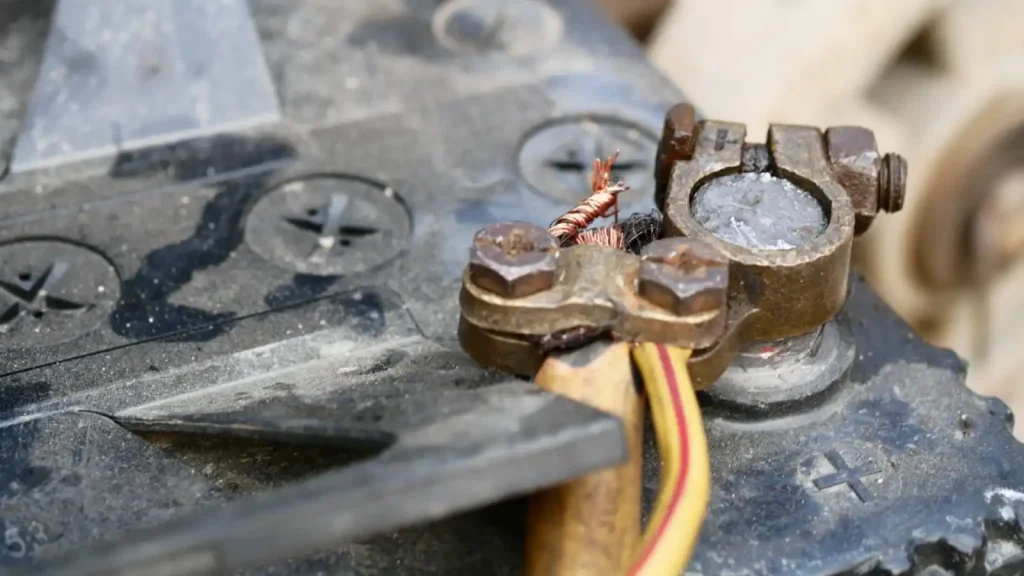
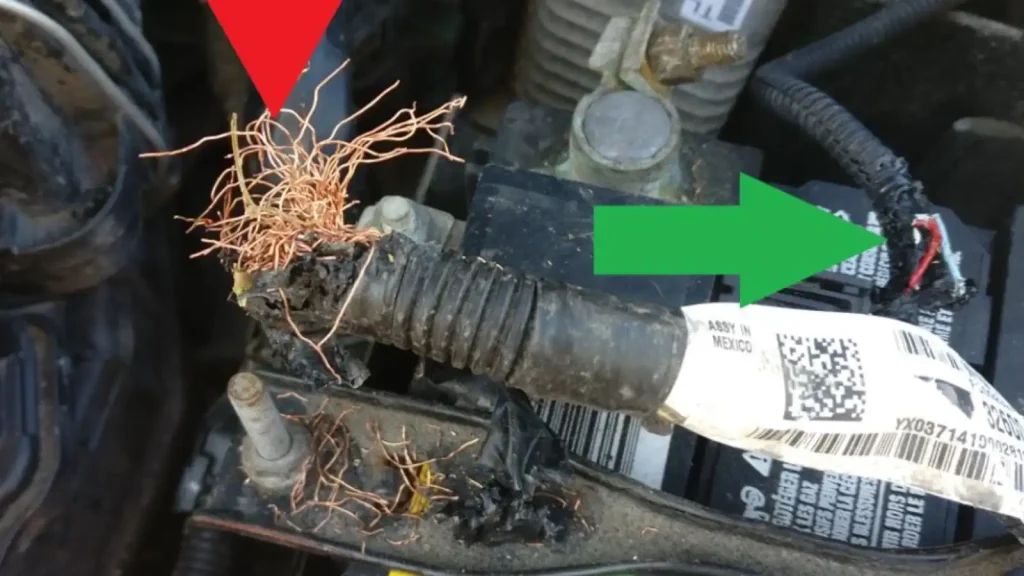
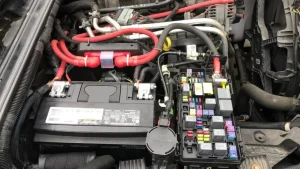
Sometimes the problem is easy to spot. Open the hood and inspect the battery cables. Look for cracked insulation, exposed copper strands, frayed cable ends, or wires that have become unusually stiff.
Battery cables are exposed to engine heat, vibration, moisture, and movement. Over time, these conditions can damage the insulation and connections, especially around the battery terminals and cable bends.
Pay attention to any cable or terminal that becomes unusually hot while cranking. Excessive heat can indicate high electrical resistance or a poor connection. Stop repeated attempts to start the Jeep and inspect the problem before continuing.
A damaged cable can affect starting reliability and may become a safety concern if the insulation or connection deteriorates further. If you find exposed wire, serious corrosion, or signs of overheating, have the cable repaired or replaced promptly.
How to Check Jeep Battery Cables Before Replacing Them
Before ordering replacement cables, take a few minutes to inspect the entire starting system. A simple visual check can reveal obvious problems, but some cable issues are hidden inside the insulation.
Battery cable inspection checklist
- Inspect both positive and negative battery cables.
- Look for corrosion, cracked insulation, frayed strands, or loose connections.
- Check that the battery terminals are clean and secure.
- Inspect the engine ground and chassis ground connections.
- Test the battery condition and voltage.
- Perform a voltage-drop test under load if slow cranking continues.
A voltage-drop test is especially useful when you’re trying to find resistance in a battery cable. A battery may show a normal voltage reading when nothing is drawing power, yet lose voltage through a poor connection when the starter is operating. Testing under load can help identify the problem more accurately.
When Should You Replace Your Jeep Battery Cables?
Consider replacing your battery cables when corrosion has spread inside the wire, insulation is damaged, terminals are deteriorated, cables heat up under load, or voltage-drop testing confirms excessive resistance.
Cleaning a terminal or replacing a damaged connector may be enough if the cable itself is still in good condition. But if the wire has internal corrosion, broken strands, or deteriorated insulation, don’t keep patching it up. A properly fitted replacement is a better solution.
Choose the Right Replacement Battery Cables for Your Jeep
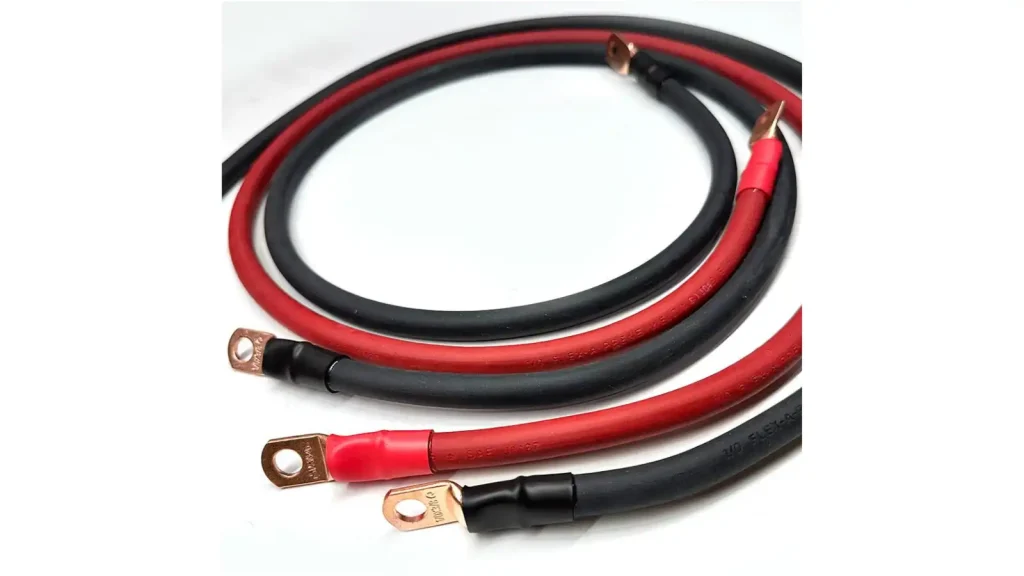
When replacing Jeep battery cables, don’t choose a cable based on thickness alone. The correct gauge depends on cable length, starter demand, electrical accessories, and how the cable is routed.
Pay attention to:
- Cable gauge: Choose the right wire size for the current demand and cable length.
- Cable length: Longer cables can experience greater voltage drop.
- Terminal configuration: Make sure the ends fit your battery, starter, and ground connections.
- Ground cables: A reliable ground connection is just as important as the positive cable.
- Cable quality: Use properly constructed cables suitable for your Jeep’s operating conditions.
At Custom Battery Cables LLC, you can explore made-to-order Jeep battery cables designed for dependable electrical connections and vehicle-specific requirements.
Final Thoughts
Bad battery cables can cause more than a Jeep that struggles to start. Corrosion, loose connections, damaged insulation, and excessive resistance can affect the starter and overall electrical performance.
If your Jeep cranks slowly, clicks when starting, has intermittent electrical issues, or shows visible cable damage, inspect the battery cables before assuming the battery is bad.
Expert Tip from Custom Battery Cables
When replacing battery cables, check the positive and negative connections together. A new positive cable won’t solve a starting problem if the engine ground is corroded or poorly connected. Always inspect the complete starting circuit before deciding which cables need replacing.
If your Jeep needs new cables, choose the correct gauge, length, and terminal configuration for your setup. Quality battery cables and reliable connections can make a real difference in starting performance.
Looking for replacement cables for your Jeep? Explore Jeep Battery Cables at Custom Battery Cables LLC and find the right cables for your vehicle.
Expert Tip from Custom Battery Cables
A Jeep that cranks slowly doesn’t always need a new battery. Before replacing parts, check the positive cable, negative cable, starter connections, and engine grounds. Corrosion or resistance in any of these connections can cause starting problems. If you’re replacing a cable, make sure the gauge and length match the electrical demand and the way the cable is routed.
Frequently Asked Questions
How do I know if my Jeep battery cables are bad?
Common signs include slow cranking, clicking when starting, corroded terminals, flickering electrical components, damaged insulation, or excessive cable heating. A voltage-drop test can help identify cable problems.
Can bad battery cables cause a Jeep not to start?
Yes. Damaged, corroded, loose, or high-resistance battery cables can prevent enough current from reaching the starter. Your Jeep may click, crank slowly, or fail to start.
Can corroded battery cables cause slow cranking?
Yes. Corrosion can increase electrical resistance and reduce the current available to the starter. If corrosion has reached inside the cable, cleaning the terminal may not solve the problem.
Should I replace both Jeep battery cables at the same time?
Not always, but inspect both cables carefully. If the positive and negative cables are similarly aged, corroded, or damaged, replacing both may help avoid another cable-related problem later.
Can bad Jeep battery cables cause electrical problems?
Yes. Poor battery cable connections can cause voltage loss, intermittent electrical operation, flickering lights, and unreliable starting. However, a failing battery, alternator, ground, or other wiring issue can produce similar symptoms.
How long do Jeep battery cables last?
Battery cable life depends on exposure to heat, moisture, road salt, vibration, corrosion, and cable quality. There isn’t a fixed replacement interval for every Jeep. Inspect them regularly and replace them when they become damaged, corroded internally, or electrically unreliable.
Are heavy-duty battery cables better for a Jeep?
Heavy-duty battery cables can be a good choice when properly sized for the Jeep’s starter requirements, cable length, and electrical accessories. The right gauge and quality connections matter more than choosing a cable simply because it is thicker.
Need Replacement Battery Cables for Your Jeep?
If your Jeep is showing signs of bad battery cables, don’t ignore the problem. Damaged, corroded, or poorly connected cables can make starting unreliable and cause frustrating electrical issues.
At Custom Battery Cables LLC, we build quality, made-to-order battery cables in the USA. Whether you’re replacing worn factory cables or upgrading your Jeep’s starting system, choosing the right cables for your setup makes a difference.
Explore our Jeep Battery Cables and find the right solution for your vehicle.
About the Author
Vincent Eminowicz
Founder & Owner, Custom Battery Cables LLC
Vincent Eminowicz founded Custom Battery Cables in 2003 and has more than 20 years of experience building battery cables for personal vehicles and heavy equipment.
Custom Battery Cables LLC builds USA-made, made-to-order battery cables for specific vehicle applications.
The approach is straightforward: understand how the cable will be used, look at the electrical requirements, consider the actual configuration, and build the cable accordingly.
That practical experience is especially useful when a Jeep has a starting problem that doesn’t make sense because the battery itself appears to be fine.