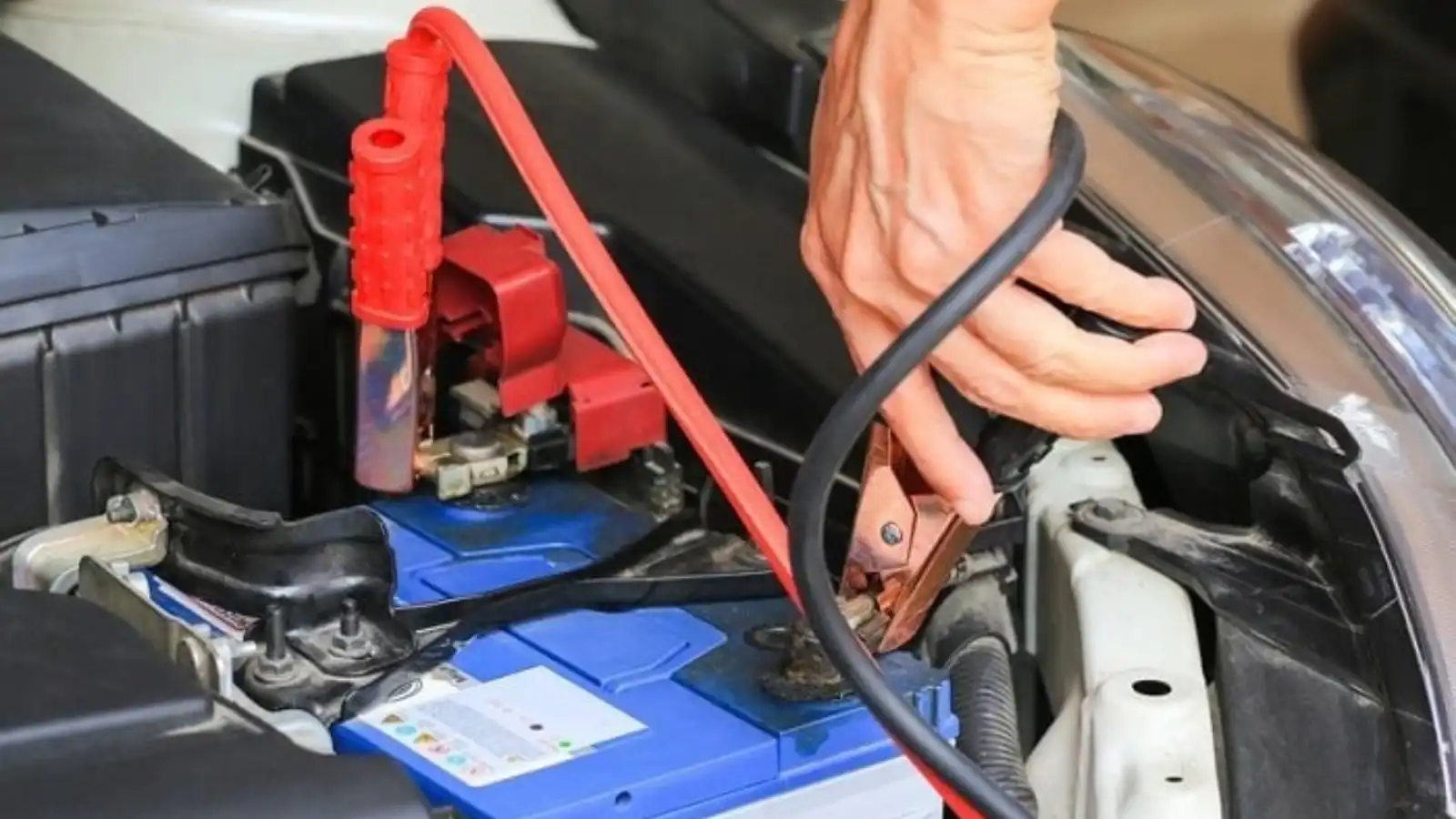
When you turn the key or punch the button to start a push-start vehicle, your Jeep may hesitate.
It could make a painful, slow-turning noise in an attempt to catch, or it might only make a single, annoying click.
Even worse, you may have bought a new battery, but the engine still takes an excruciating amount of time to catch.
When this happens, most people would blame their starter.
Don’t reach for the wrench yet.
There could be several reasons why your Jeep may be hard to start.
While a dying battery is a primary culprit, your battery’s cables or grounding circuit may also be to blame.
Even though the battery on your Jeep may be at full charge, if it can’t provide the juice to the starter motor, your Jeep will be rendered immobile until the problem is fixed.
Before you run out and replace the starter, consider the following 5 common battery cable pitfalls:
1. The Tale of the Slow, Tired Crank
Pay attention to the sound your Jeep makes. If you hear a sluggish, rhythmic “rrr…rrr…rrr…” that eventually catches, you likely have massive resistance in your system.
The starter motor is a heavy duty item that requires an excruciating amount of current to spin your engine. This current has to travel down the main battery cables.
If a cable is fraying, corroded, or undersized for the engine it’s powering, it will severely restrict the current like a kinked garden hose.
Older Jeeps are especially prone to this.
Years of engine heat, vibration from rough trails, and exposure to moisture, mud, and road salt can affect the cables’ durability.
When shopping for replacement Jeep battery cables, you shouldn’t buy based on appearance alone.
A battery cable from an auto parts counter may seem suitable, but it’s best to find an exact fit for your Jeep’s engine.
2. The Hidden Peril of Terminal Corrosion
Many of us have seen the fluffy white/green substance that can grow on a battery’s terminals. You may think that a little corrosion won’t hurt anything, but it can be an insulator at the connection.
When you look at your Jeep’s starting system, you cannot only focus on the battery. Check the clamps and engine block grounding terminal on the positive and negative sides. Pay special attention to the chassis grounding points as well.
Expert Mechanic Tip: Don’t be fooled by a nice, shiny cable. Copper is a reactive metal that corrodes from the inside out. If you have moisture creep under the plastic insulation, the copper can turn into a green powder on the inside, ruining the connection while looking good on the outside.
If you clean your terminals and your Jeep starts right up, only to start sputtering a week later, the corrosion may have been on the inside of the cable. It won’t help to clean the outside.
3. The Highways of the Positive Side
The positive side is your main power line running from the battery to the starter. If there is a large amount of resistance in this circuit caused by overheating, internal cable degradation, or poor mounting hardware, there will be a large voltage drop to the starter motor.
Instead of guessing, it’s best to actually test for this with a digital multimeter.
Using your meter, you attach it to your positive battery post and the positive on your starter. While someone cranks your engine, you can see if there is a significant voltage drop on the meter. If there is, your positive side is choked off and will need to be replaced. By doing this test, you can save yourself time and money.
4. The Neglected Half of the Equation: The Ground Cable
The negative side of your electrical system is just as important as the positive. Electricity has to flow in a circuit, so the negative side gives the current a path back to the engine block.
If you have a poor ground, you may experience some very strange behavior from your Jeep.
The engine may seem to only crank properly when it’s cold, but refuse to start when it’s hot.
You may also have intermittent clicking or erratic dash lighting behavior. Your Jeep may also be intermittent in its starting performance. Sometimes it works, and sometimes it doesn’t.
Many times, people mistakenly only replace the positive cable, leaving a 15 year old factory ground wire in place. A new battery will not overcome the problems of a bad ground. Always check the connections on the ground side where the negative cable connects to the frame and engine block to make sure they’re clean and tight.
5. Knowing the True Voltage Drop
Testing the voltage of a battery while it’s dormant is one thing, but it doesn’t tell you the whole story.
A rested battery may show a nice 12.6 volts on your meter, but that’s only a fraction of what the battery will put out under load.
When you apply the load of a starter motor, a voltage drop test will show you just how much voltage is being lost due to poor connections, undersized cabling, or other issues.
If your cables are bad, that 12.6 volts that you measured at the battery’s posts will drop dramatically at the starter motor when in use. This is why a battery that may seem fine at the local auto parts store can fail you on the trail if your cables are bad.
Expert Material Tip from Custom Battery Cables: When upgrading existing high current wiring, you shouldn’t just go with the standard factory size. Look at your cable’s route to determine the proper size. Factors such as length, overall current draw, terminal orientation, and distance from hot exhaust manifolds will determine the proper size of wire.
What to Do Now If your Battery Tests Perfect
If your battery is fine, but your Jeep is reluctant to start, it’s best not to rush and blame the starter motor. Instead, follow this procedure to check the starting circuitry in order:
First, check the battery clamps to see if they are tight enough that you can’t twist them by hand. Then, visually inspect the main battery cables (positive and negative) for any swelling or stiffness that would indicate internal rust. Clean your grounding points until you see shiny, bare metal. Perform the voltage drop tests and make sure the small, starter solenoid trigger wire has good contact. Only when you’ve verified everything else is working properly should you suspect the starter motor of being faulty.
Upgrading vs. Replacing Your Jeep’s Wiring
For a daily driver that mostly sticks to the pavement, an OEM-style replacement cable should be just fine. However, if you’ve made any upgrades to your rig, a standard replacement cable may not be the best option.
If you have a factory winch, a high-output alternator, a second battery, or lots of auxiliary off-road lighting, you may have higher electrical demands than your stock Jeep.
In these cases, it’s best to get heavy-duty, marine-grade copper cables with sealed adhesive-lined heat shrink. Upgrading to cables with a larger wire gauge will reduce engine heat stress, reduce resistance, and ensure that the maximum current from your battery gets to your starter motor. Companies like Custom Battery Cables LLC specialize in creating heavy gauge, USA-made cable kits for the Cherokee and Grand Cherokee that will ensure that your rig will start right up whether you’re at home or on the trail.
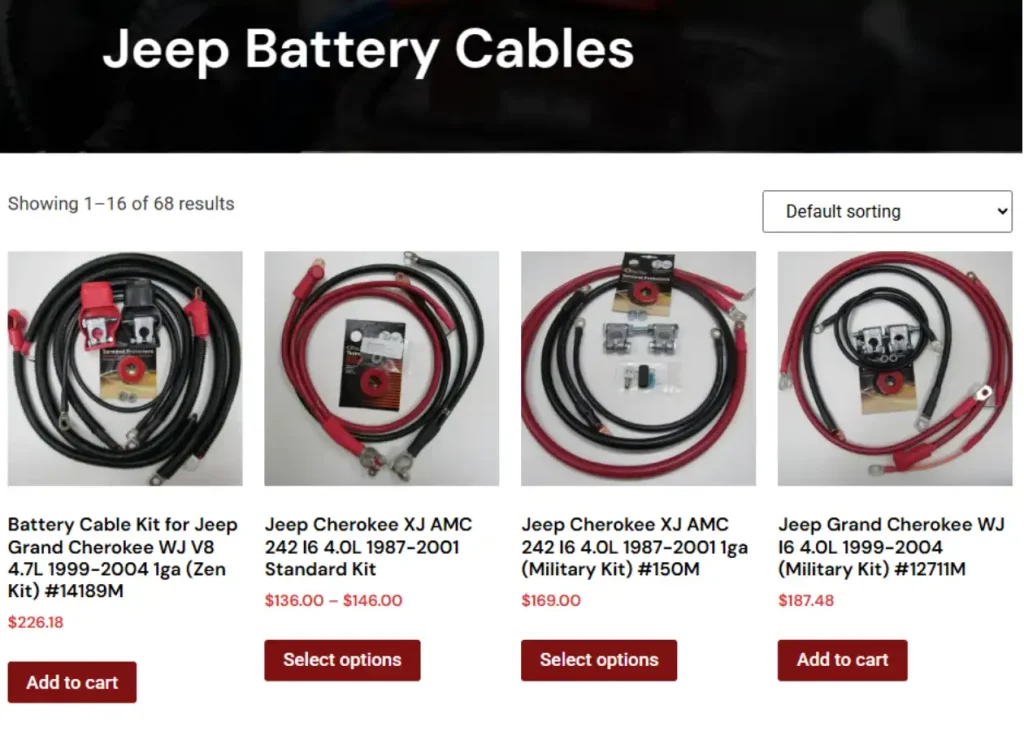
Shop Custom Jeep battery cables made in the USA.
A Simple Way to Think About the Problem
Think of the starting system like a road.
The battery is where the power starts.
The starter is where that power needs to go.
The battery cables and connections are the road between them.
If the battery is weak, you have a problem at the source.
But if the road has a bad connection or too much resistance, the starter can still struggle even when the battery is good.
That’s why checking the complete circuit matters when diagnosing Jeep hard starting.
Frequently Asked Questions
Why is my Jeep hard starting but the battery is good?
A good battery doesn’t always mean the starting system is good. Damaged cables, corroded terminals, weak grounds, excessive voltage drop, or a starter problem can still cause hard starting.
Why does my Jeep crank slowly?
Slow cranking can be caused by a weak battery, poor connection, damaged cable, weak ground, excessive voltage drop, or a failing starter.
Can a bad battery cable cause a Jeep not to start?
Yes. A damaged or high-resistance cable can prevent enough current from reaching the starter. This can cause clicking, slow cranking, intermittent starting, or a complete no-start condition.
How do I know if my Jeep battery cable is bad?
Look for corrosion, damaged insulation, loose terminals, overheated connections, or physical damage. A voltage-drop test can also find problems that aren’t visible from the outside.
Should I replace or upgrade my Jeep battery cables?
If the original cable is damaged, replace it with the correct cable for your application. If your Jeep has higher electrical demands, a properly selected heavy-duty cable may be a better choice.
Get the Right Jeep Battery Cable
If you’ve checked the battery and your Jeep still has a hard-starting or slow-cranking problem, don’t overlook the cables.
The right battery cable isn’t just about finding the right length.
Gauge, length, terminals, routing, connections, and grounding all matter.
Custom battery cable LLC builds USA-made, made-to-order battery cables for Jeep applications based on the vehicle and cable requirements.
Browse the Jeep battery cables category to find the right application for your Jeep.
If you own a Cherokee or Grand Cherokee, look at the available Jeep Cherokee and Grand Cherokee battery cables for the correct application.
And if you need a specific Jeep battery cable replacement, match the cable to the actual vehicle and installation requirements rather than guessing from appearance.
The right cable can make a real difference.
But start with the diagnosis. Find the problem first, then choose the cable that fits the job.
Expert Tip from Custom Battery Cables
When replacing a high-current battery cable, don’t select the gauge based only on the vehicle model.
Consider cable length, electrical load, terminal configuration, routing, and the condition of the grounding system.
That’s how you get a cable that fits the application instead of simply finding one that looks like the original.
About the Author

Vincent Eminowicz
Founder & Owner, Custom Battery Cables LLC
Vincent Eminowicz founded Custom Battery Cables in 2003 and has more than 20 years of experience building battery cables for personal vehicles and heavy equipment.
Custom Battery Cables LLC builds USA-made, made-to-order battery cables for specific vehicle applications.
The approach is straightforward: understand how the cable will be used, look at the electrical requirements, consider the actual configuration, and build the cable accordingly.
That practical experience is especially useful when a Jeep has a starting problem that doesn’t make sense because the battery itself appears to be fine.